Distal Biceps Tendon Tear Treatment in Boca Raton, Boynton Beach & Delray Beach, FL
A distal biceps tendon tear is a serious elbow injury that can cause sudden pain, swelling, bruising, and significant weakness when bending the elbow or rotating the forearm. These injuries often occur during heavy lifting, sports activities, or forceful movements that place excessive stress on the tendon. Dr. William P. Toole is a board-certified, fellowship-trained orthopedic sports medicine specialist providing comprehensive diagnosis and treatment for distal biceps tendon tears in Boca Raton, Boynton Beach, and Delray Beach. Through advanced imaging, personalized treatment planning, and minimally invasive surgical techniques when appropriate, Dr. Toole helps patients restore strength, function, and confidence while returning safely to work, sports, and daily activities.
Anatomy of the Biceps Tendon
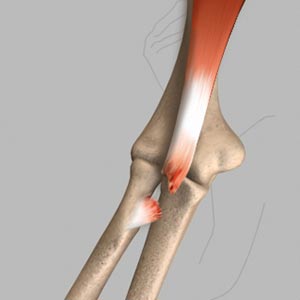 The biceps muscle, located in the front of the upper arm allows you to bend the elbow and rotate the arm. Biceps tendons attach the biceps muscle to the bones in the shoulder and in the elbow. The biceps tendon that attaches the muscle at the elbow is known as the distal biceps tendon.
What is a Bicep Tendon Tear?
A biceps tear can be complete or partial. Partial biceps tendon tears will not completely break the tendon while complete tendon tears will break the tendon into two parts. Tears of the distal biceps tendon are usually complete and the muscle is separated from the bone. Tears of the distal biceps tendon most often result from a sudden injury or lifting a heavy object.
Causes of Bicep Tendon Tears
A biceps tendon tear can be caused by an injury where your elbow is forced against resistance or while lifting heavy objects. Other problems such as tendonitis are more likely to weaken or tear the biceps tendon. Additional risk factors such as advancing age, smoking and use of corticosteroids can also result in a tendon tear.
Symptoms of Bicep Tendon Tears
The most common symptom of a biceps tendon tear is sudden, severe pain at the elbow. At times, you may hear a pop. Other symptoms may include swelling, visible bruising, weakness in the elbow, and trouble twisting the forearm. A bulge in the upper region of your arm, because the tendon is no longer holding the muscle in place properly, and a gap in the front of the elbow because of the absence of the tendon.
Diagnosis of Bicep Tendon Tears
A biceps tendon tear is usually diagnosed based on your symptoms, medical history, and a physical examination. During the physical examination, your doctor will look for a gap in the front of the elbow. Your doctor will diagnose a partial tear by asking you to bend your arm and tighten the biceps muscle. You may have pain if there is a partial tear. X-rays may be taken to rule out other conditions causing elbow pain. Using an MRI scan, your doctor can confirm if the tear is partial or complete.
Treatment Options for Bicep Tendon Tears
Non-surgical Treatment Options for Bicep Tendon Tears
Conservative treatment for a proximal biceps tendon tear includes:
- Ice application
- Limiting activity
- Non-steroidal anti-inflammatory medications to reduce the pain and swelling
- Flexibility and strengthening exercises to restore the mobility and strength of the surrounding muscles
Surgery for Bicep Tendon Tears
Surgery to reattach the torn tendon back to the bone is rarely needed. However, it may be the best option for patients with partial tears who continue to experience symptoms after non-surgical treatments or who want all their arm strength back, such as athletes or manual laborers.
Your surgeon may opt for several surgical procedures for distal bicep tendon tear where the distal biceps tendon is reattached to the forearm bone. One or two incisions may be used. During the procedure, the tendon is attached with stitches through holes drilled inside the bone or small metal implants may be used to attach the tendon to the bone.
Post-surgical Care for Bicep Tendon Tears
Following surgical repair, you will be advised flexibility and strengthening exercises to improve the range of motion in your shoulder.
Risks and Complications of Bicep Tendon Tears
Complications are rare and may include numbness and weakness in the forearm, formation of new bone, limited movement and tearing may recur.
Why Choose Dr. William Toole for Distal Biceps Tendon Tear Treatment in Boca Raton, Boynton Beach & Delray Beach?
A distal biceps tendon tear can significantly affect arm strength and function, particularly for active individuals, athletes, and those whose occupations require lifting or manual labor. Dr. William P. Toole is a fellowship-trained orthopedic surgeon specializing in sports medicine and advanced treatment of tendon, ligament, and joint injuries. He provides comprehensive evaluation and individualized treatment plans based on the severity of the injury, the patient's activity level, and long-term goals. Whether treatment involves conservative management or surgical tendon repair, Dr. Toole focuses on restoring elbow strength, forearm rotation, and overall arm function while helping patients achieve the best possible recovery.
Distal Biceps Tendon Tear FAQs
What is a distal biceps tendon tear?
A distal biceps tendon tear occurs when the tendon connecting the biceps muscle to the radius bone near the elbow partially or completely detaches. This injury can significantly affect elbow flexion strength and the ability to rotate the forearm.
What causes a distal biceps tendon tear?
Most distal biceps tendon tears occur when a sudden force is applied to a bent elbow, often while lifting a heavy object. The injury is commonly seen in weightlifters, athletes, laborers, and active adults performing strenuous activities.
What are the symptoms of a distal biceps tendon tear?
Patients often report a sudden popping sensation near the elbow followed by pain, swelling, bruising, weakness, and difficulty rotating the palm upward. In some cases, the biceps muscle may appear to move upward toward the shoulder, creating a visible deformity.
How is a distal biceps tendon tear diagnosed?
Diagnosis typically begins with a physical examination and review of the injury. Imaging studies such as MRI or ultrasound may be used to confirm the diagnosis and determine whether the tendon is partially or completely torn.
Can a distal biceps tendon tear heal without surgery?
Partial tears and certain low-demand patients may be treated conservatively with rest, physical therapy, and activity modification. However, complete tears often result in significant strength loss and may be best treated with surgical repair, particularly in active individuals.
When is surgery recommended for a distal biceps tendon tear?
Surgery is commonly recommended for complete tendon tears, especially in patients who wish to restore strength and function. Early surgical intervention often provides the best opportunity for successful tendon reattachment and recovery.
What happens if a distal biceps tendon tear is not repaired?
Without repair, patients may experience permanent weakness when bending the elbow and rotating the forearm. This can affect activities such as lifting, carrying, turning tools, opening jars, and participating in sports.
How long does recovery take after distal biceps tendon repair?
Recovery timelines vary based on the severity of the injury and the patient's rehabilitation progress. Most patients begin physical therapy after surgery and gradually regain strength over several months. Full recovery often occurs within four to six months, although some patients may require additional time before returning to high-demand activities.
Will I need physical therapy after treatment?
Yes. Physical therapy is typically an important part of recovery. A structured rehabilitation program helps restore flexibility, strength, range of motion, and overall arm function while protecting the healing tendon.
Can athletes return to sports after a distal biceps tendon tear?
Many athletes successfully return to sports following appropriate treatment and rehabilitation. Return-to-play decisions are based on healing progress, strength recovery, and the specific demands of the sport.
Schedule a Distal Biceps Tendon Tear Evaluation in Boca Raton, Boynton Beach & Delray Beach
If you have experienced sudden elbow pain, weakness, bruising, or a popping sensation near the elbow, prompt evaluation is important. Dr. William Toole provides expert diagnosis and treatment for distal biceps tendon tears throughout Boca Raton, Boynton Beach, and Delray Beach. Whether your injury can be managed conservatively or requires surgical repair, you can expect personalized care focused on restoring strength, function, and long-term performance. Contact our office today to schedule an evaluation and learn about your treatment options.