The moment an ACL tears, most athletes ask the same question before anything else: how long until I'm back on the field? It's a fair question, but the honest answer depends on more than a calendar date. Understanding the surgery itself, along with the real, evidence-based timeline for recovery, helps set expectations that actually match how healing works.
Why ACL Reconstruction Is Necessary in the First Place
Unlike many soft tissue injuries, a torn ACL doesn't heal on its own, since the ligament's poor blood supply and torn ends generally don't reconnect naturally. For patients who want to return to pivoting, cutting, or jumping sports, reconstruction using a graft is typically the only reliable path back to that level of function. Some patients with lower activity demands can manage without surgery, but those hoping to return to competitive or recreational sports usually require reconstruction to restore the knee's stability.
The Surgical Approach
ACL reconstruction is performed arthroscopically, using small incisions and a camera-guided technique rather than a large open incision. The torn ligament remnants are removed, and a new graft, typically taken from the patient's own patellar, hamstring, or quadriceps tendon, is threaded through carefully positioned bone tunnels and secured in place. This minimally invasive approach reduces surrounding tissue disruption and generally supports a smoother initial recovery. Any additional damage discovered during surgery, such as a meniscus tear, is addressed in the same procedure, which is common enough that surgeons routinely plan for this possibility ahead of time.
Weeks One Through Two: Controlling Swelling and Pain
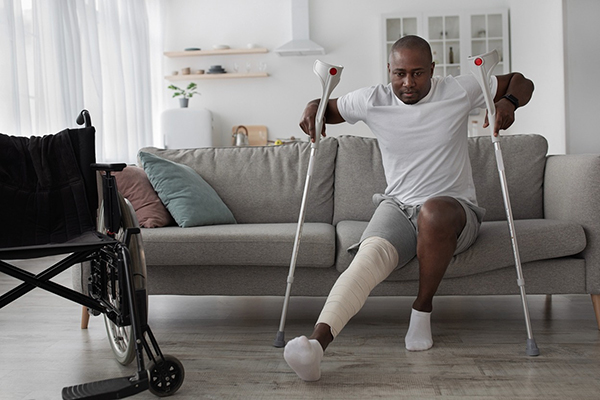
The earliest phase of recovery focuses on managing swelling, controlling pain, and beginning gentle range of motion exercises. Crutches are typically needed initially, and a knee brace may be used to protect the healing graft during this fragile early period. Physical therapy usually begins within the first week or two, starting with simple movements designed to prevent stiffness without stressing the new graft.
Weeks Three Through Twelve: Rebuilding Range of Motion and Strength
As swelling subsides, therapy shifts toward restoring full range of motion and gradually rebuilding strength in the surrounding muscles, particularly the quadriceps, which tend to weaken quickly after knee surgery. This phase is where consistency matters more than intensity, since pushing too hard too early can irritate the healing graft, while under-loading it can leave the knee weak and unstable later on.
Months Three Through Six: Progressive Loading and Functional Training
Once the graft has had time to begin incorporating into the bone, rehabilitation progresses to more dynamic exercises, including balance training, controlled agility work, and sport-specific movement patterns. This stage builds the foundation for higher-level activity, but it is not yet the point where return to cutting or pivoting sports is appropriate, regardless of how strong the knee may start to feel.
Months Six Through Twelve: Clearance for Return to Sport
Return to sport isn't based on a fixed date but on objective testing, including strength comparisons between the surgical and non-surgical leg, hop tests, and movement assessments that evaluate how the knee performs under sport-like stress. Research has increasingly shown that athletes who return before nine months, particularly those who haven't met specific strength and functional benchmarks, face meaningfully higher rates of reinjury. This is why a structured, criteria-based rehab protocol, rather than a generic timeline, plays such an important role in determining true readiness.
When Multi-Ligament Injuries Complicate the Timeline
In higher-energy injuries, the ACL isn't always the only structure damaged. When multiple ligaments require reconstruction simultaneously, recovery timelines generally extend further, since the knee has more structures that need to heal and regain strength in a coordinated way before it can safely handle athletic demands again.
Frequently Asked Questions
How long does it take to fully recover from ACL reconstruction?
Most patients reach full recovery and are cleared for pivoting sports between nine months and a year after surgery, though basic daily activities and light exercise typically resume much sooner, often within a few months.
When can I start walking without crutches after ACL surgery?
Many patients transition off crutches within one to two weeks, though this depends on graft type, any additional procedures performed, and how quickly swelling and strength improve.
Is it safe to return to sports before nine months post-surgery?
Returning before nine months is generally associated with a higher risk of reinjury, particularly if strength and functional testing benchmarks haven't been met, which is why criteria-based clearance matters more than time alone.
What determines when I'm ready to return to sport after ACL surgery?
Readiness is typically determined through strength testing comparing both legs, hop and agility assessments, and how the knee performs under sport-specific movements, rather than a fixed number of months.
Does a meniscus tear affect ACL reconstruction recovery time?
Yes, if a meniscus tear is repaired during the same surgery, recovery may take longer since meniscus tissue generally requires more protected healing time compared to isolated ACL reconstruction alone.
A safe return to sport after ACL reconstruction depends on following a timeline built around your knee's actual healing, not the calendar. If you're facing an ACL injury in the Boynton Beach area and want a clear surgical and recovery plan, scheduling a consultation is a solid next step.
Dr. William P. Toole, MD, FAAOS is a board-certified, fellowship-trained orthopedic surgeon and sports medicine specialist serving patients across Boynton Beach, Boca Raton, Delray Beach, and the greater Palm Beach County area. A graduate of the honors college at Clemson University, Dr. Toole earned his medical degree with honors from the University of South Carolina School of Medicine and completed his orthopedic surgery residency at the University of Florida / Mayo Clinic Florida — one of the most respected training programs in the country. He is certified by the American Board of Orthopaedic Surgery, a Fellow of the American Academy of Orthopaedic Surgeons (FAAOS), and a member of the American Orthopaedic Society for Sports Medicine.