Subchondroplasty in Boca Raton, Boynton Beach & Delray Beach, FL
Subchondroplasty is a minimally invasive orthopedic procedure designed to treat painful bone marrow lesions and subchondral bone defects that can contribute to joint pain, cartilage damage, and the progression of osteoarthritis. By addressing underlying bone abnormalities beneath the joint surface, subchondroplasty may help reduce pain, improve function, and support joint preservation in appropriately selected patients. Dr. William P. Toole is a board-certified, fellowship-trained orthopedic sports medicine specialist providing advanced joint preservation and cartilage restoration treatments for patients throughout Boca Raton, Boynton Beach, and Delray Beach. Through comprehensive evaluation and personalized treatment planning, Dr. Toole helps patients determine whether subchondroplasty may be an effective option for relieving joint pain and preserving long-term joint health.
What are Bone Marrow Lesions?
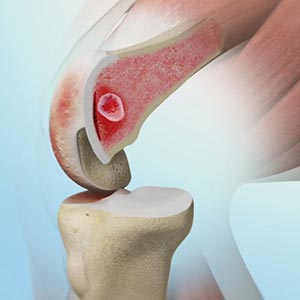 Knee osteoarthritis (OA) is a common form of arthritis that causes joint pain and stiffness. It is a progressive disease in which the joint cartilage gradually wears away, leading to disability.
Bone marrow lesions or BMLs are strong predictors of osteoarthritic cartilage damage. They are visible on an MRI but not on a regular X-ray. BMLs are sites of chronic inflammation of subchondral bone. They lie below the bone surface within the marrow and are accompanied by swelling and fluid collection (edema). BMLs are associated with subchondral defects, insufficiency fractures, and stress fractures.
Treatments for Bone Marrow Lesions
Conservative treatments for BMLs include pain medications, knee braces, crutches, and physical therapy. However, long-lasting (chronic) BMLs that do not heal by themselves will require treatment. Those with chronic BMLs have faster cartilage destruction and are more likely to require a total knee replacement earlier.
What is Subchondroplasty?
Subchondroplasty is a minimally invasive procedure that is performed to specifically repair chronic BMLs by filling them with a bone substitute material. The bone substitute is then slowly resorbed and replaced with healthy bone, repairing the bone defect. Subchondroplasty also resolves the associated edema. Subchondroplasty may be performed alone or along with other arthroscopic procedures.
Ideal Candidates for Subchondroplasty
Subchondroplasty is indicated if BMLs is the primary source of pain in the knee. However, subchondroplasty is contraindicated if your BMI is more than 40 or you have severe malalignment of the knee joint.
Subchondroplasty Procedure
The whole subchondroplasty procedure is performed under fluoroscopy to accurately target chronic BMLs. Fluoroscopy provides your surgeon with intraoperative real-time X-ray images of the surgical area to guide the surgeon.
- Subchondroplasty is performed under general anesthesia.
- A semi-circular reference frame is placed relative to your tibia or shinbone. This allows your surgeon to target the internal subchondral location of BML from a range of trajectories. A pin is inserted through the skin to the bone under fluoroscopic imaging using this semi-circular frame.
- A cannulated drill is then used to advance the pin to the desired depth in the bone.
- The semi-circular guide is then removed leaving only the pin.
- A cannula is placed over the pin and is slid into the bone until it is firmly in place.
- The Luer lock of the delivery syringe filled with the bone substitute is attached to the back of the cannula.
- The bone substitute is then injected into the bone by applying steady pressure. The delivery syringe is then detached. If more bone substitute is required, an additional filled syringe may be attached to the same cannula and injected until the desired volume is reached.
- A trocar is inserted into the delivery cannula to push the left over bone substitute into the bone.
- The cannula is then removed.
- Finally, proper placing of the bone substitute is confirmed using the fluoroscopic imaging and the incision is closed.
After Subchondroplasty Procedure
Some pain and discomfort in the operated area are usually experienced for 1-2 days after the procedure. Pain medications will be prescribed to manage it. Crutches will be recommended for 1-2 weeks after the surgery to reduce weight-bearing on the operated leg. Physical therapy will also be recommended to regain strength and mobility in the knee.
Advantages of Subchondroplasty
Subchondroplasty is a minimally invasive procedure with the following advantages:
- It is an outpatient procedure. The patient is usually discharged on the same day after the surgery.
- It leads to faster recovery and quicker return to normal activities.
- It does not hinder total knee replacement if required in the future.
Why Choose Dr. William Toole for Subchondroplasty in Boca Raton, Boynton Beach & Delray Beach?
Chronic joint pain caused by bone marrow lesions and early degenerative changes can significantly affect mobility and quality of life. Successful treatment requires accurate diagnosis and a thorough understanding of joint preservation techniques. Dr. William P. Toole is a fellowship-trained orthopedic surgeon specializing in sports medicine, cartilage restoration, and joint preservation. He carefully evaluates each patient's symptoms, imaging studies, activity level, and long-term goals before recommending treatment. By utilizing advanced procedures such as subchondroplasty, Dr. Toole helps patients address the underlying causes of joint pain while preserving their natural joints whenever possible.
Subchondroplasty FAQs
What is subchondroplasty?
Subchondroplasty is a minimally invasive procedure used to treat bone marrow lesions and defects within the subchondral bone, which is the layer of bone located directly beneath joint cartilage. The procedure involves injecting a specialized bone substitute material into the affected area to provide structural support and promote healing.
What are bone marrow lesions?
Bone marrow lesions are areas of stress, damage, or inflammation within the bone beneath the joint surface. These lesions are commonly associated with joint pain, cartilage degeneration, and the development or progression of osteoarthritis.
What joints can be treated with subchondroplasty?
Subchondroplasty is most commonly performed in the knee but may also be considered in other joints depending on the location and nature of the bone lesion.
Who is a candidate for subchondroplasty?
Candidates often include patients with persistent joint pain associated with bone marrow lesions identified on MRI scans. Individuals who have not achieved adequate relief through conservative treatments may benefit from evaluation for this procedure.
What symptoms may indicate a bone marrow lesion?
Patients commonly experience deep joint pain, swelling, discomfort with weight-bearing activities, stiffness, and limitations during exercise or daily activities. Symptoms may persist despite traditional treatments.
How are bone marrow lesions diagnosed?
Diagnosis typically involves a physical examination and advanced imaging studies. MRI is particularly useful because it can identify bone marrow lesions that may not be visible on standard X-rays.
How is subchondroplasty performed?
During the procedure, specialized imaging guidance is used to precisely locate the lesion. A bone substitute material is then injected into the damaged area of bone, where it provides support and is gradually replaced by the patient's natural bone during the healing process.
Is subchondroplasty performed with other procedures?
Yes. Subchondroplasty is often performed in conjunction with knee arthroscopy to address additional joint problems such as cartilage damage, meniscus tears, or other structural abnormalities.
What is recovery like after subchondroplasty?
Recovery varies based on the severity of the condition and whether additional procedures are performed. Many patients are able to resume light activities relatively quickly, while rehabilitation may continue for several weeks or months.
Will I need physical therapy after subchondroplasty?
Physical therapy is often recommended to help restore strength, mobility, joint stability, and overall function. Rehabilitation plans are tailored to the patient's individual needs and treatment goals.
Can subchondroplasty help delay knee replacement?
For appropriate candidates, subchondroplasty may help reduce symptoms, improve function, and potentially delay the need for knee replacement surgery by addressing underlying bone abnormalities and supporting joint preservation efforts.
What are the benefits of subchondroplasty?
Potential benefits include reduced joint pain, improved mobility, enhanced function, preservation of the natural joint, and a minimally invasive treatment approach with relatively shorter recovery times compared to more extensive procedures.
Schedule a Subchondroplasty Consultation in Boca Raton, Boynton Beach & Delray Beach
If chronic joint pain is limiting your ability to stay active and conservative treatments have not provided sufficient relief, Dr. William Toole can help determine whether subchondroplasty may be an appropriate treatment option. Patients throughout Boca Raton, Boynton Beach, and Delray Beach trust Dr. Toole for advanced joint preservation and cartilage restoration solutions designed to improve function and support long-term joint health. Contact our office today to schedule a consultation and learn more about your treatment options.